Read beyond the name
A niche canyon name may describe a route, a branded tour, a local operating identity, or some combination of the three. Always compare the actual route description, not just the headline.
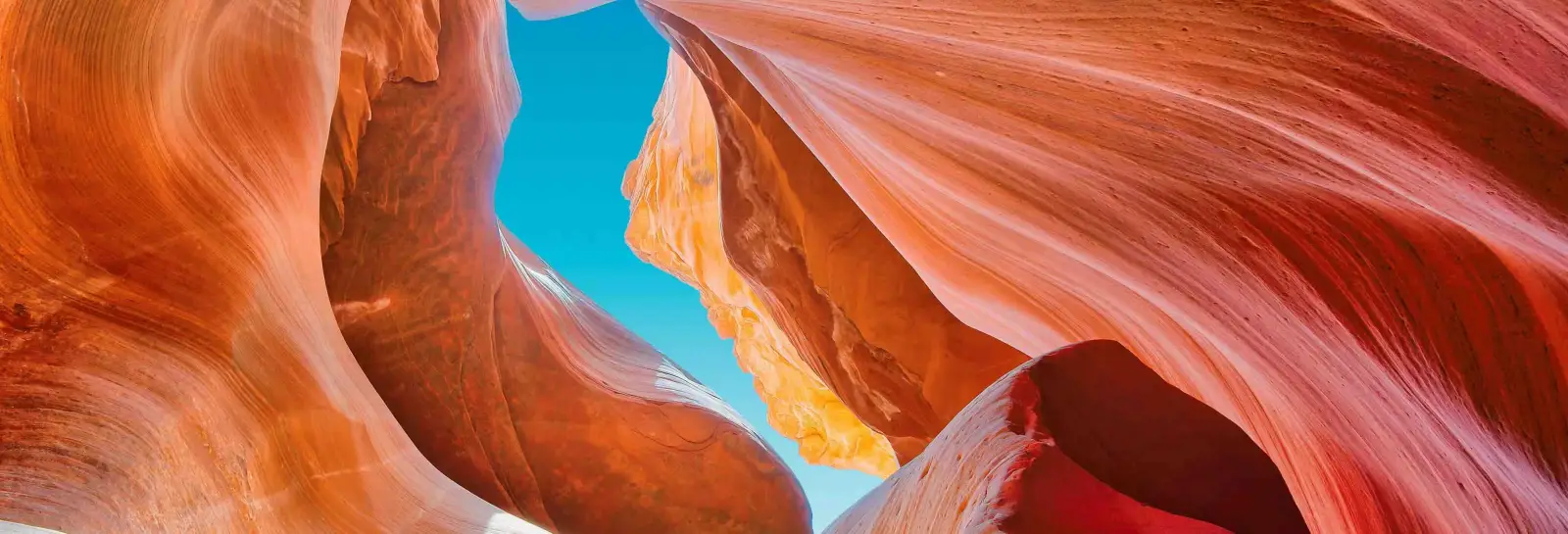
If Upper, Lower, and Antelope Canyon X feel too mainstream, too booked up, or simply not like the right fit, there are smaller slot canyon names around Page worth understanding. This guide explains what Secret Canyon, Ligai Si' Anii, Mystical Antelope Canyon, and other niche canyon experiences actually represent, who they fit best, and when the main Antelope Canyon sections are still the better choice.
Not every smaller canyon near Page is a true substitute for Upper, Lower, or Canyon X. Some are better understood as different kinds of Navajo-guided slot canyon experiences.
Most travelers begin with three familiar names: Upper Antelope Canyon, Lower Antelope Canyon, and Antelope Canyon X. That is the mainstream decision set, and for many visitors it is still the right one.
But around Page, Arizona, you will also encounter smaller canyon names such as Secret Canyon, Ligai Si' Anii, and Mystical Antelope Canyon. These names matter because they attract a different kind of intent: travelers who want a less standardized outing, repeat visitors who have already done the main three, photographers seeking a different rhythm, or visitors who simply want a narrower, more local-feeling experience.
The mistake is assuming that “smaller name” automatically means “better,” “less crowded,” or “basically the same as Antelope Canyon but cheaper.” In practice, the tradeoff is more nuanced. Smaller canyon experiences can feel more intimate, but they may also be less standardized in route length, transfer style, meeting-point logistics, and what the tour emphasizes once you are there.
The right way to compare these options is not by hype words like secret, mystical, or exclusive. It is by the actual structure of the outing: how the terrain feels, whether the day is photo-led or story-led, how predictable the route is, and whether you are choosing a canyon category or a more operator-specific branded experience.
Alternatives are strongest when your goal is more specific than “see Antelope Canyon once.”
Some travelers care less about famous beam photos and more about the overall feel of the outing. Smaller canyon names can appeal when you want something that feels more off the obvious tourist track.
If you have visited Upper, Lower, or Canyon X before, a niche canyon can give you a different route style and a fresh visual rhythm rather than a repeat of the same core experience.
The real question is not “which one is cheaper.” It is whether you want the day to be iconic and efficient, more exploratory, more intimate, or more operator-led in character.
This is the useful high-level view: not who sounds most exotic, but what kind of day each name tends to represent.
| Canyon / Name | Best For | What It Usually Signals | Use Caution If... |
|---|---|---|---|
| Secret Canyon | Travelers wanting a strong slot canyon feel without defaulting to the most famous name | A more niche, less “standardized tourist checklist” canyon day | You only care about iconic Upper-style beam expectations |
| Ligai Si' Anii | Repeat visitors or travelers who want something more locally distinctive | An experience tied more closely to a specific local offering than to a universally standardized canyon category | You want the simplest possible comparison and fixed expectations |
| Mystical Antelope Canyon | Visitors drawn to a smaller-feeling, more intimate outing | A branded canyon experience where route character and atmosphere may matter more than famous-photo status | You assume every “Antelope” name delivers the same structure as Upper or Lower |
| Owl / Rattlesnake | Enthusiasts willing to research more carefully | Smaller-volume or more specialized slot canyon products | You need a broad-consensus “first-timer” recommendation |
| Canyon X (reference point) | Travelers who still want mainstream booking simplicity with a calmer profile | The easiest bridge between “famous Antelope” and “less mainstream” | You are expecting a truly obscure experience |
If you only research one smaller-name canyon around Page, make it Secret Canyon.
Secret Canyon is the cleanest example of an Antelope-area alternative that has developed its own search identity. It is often the first name people encounter when they want a slot canyon experience near Page that feels less like the default “Upper vs Lower” decision.
For planning purposes, think of Secret Canyon as the option most likely to appeal to travelers who still want an obvious slot canyon outing, but want the day to feel a little less mass-market and a little more deliberately chosen.
It is not the right fit for everyone. If your trip priority is “show me the most famous Antelope image I have seen online,” Upper remains the more direct choice. But if your goal is “I want a strong canyon day without defaulting to the most famous route,” Secret Canyon becomes a meaningful comparison point.
This is the kind of canyon name that separates shallow content from useful content.
Ligai Si' Anii is exactly the sort of name that serious researchers notice once they move beyond the first page of mainstream Antelope Canyon results. Including it strengthens the site because it shows the Page-area canyon ecosystem is larger than three heavily repeated names.
More importantly, it forces a better planning habit: understanding when a canyon is being described as a broadly recognized category versus when the experience is more tightly tied to a specific local operator or branded route.
Travelers should not treat Ligai Si' Anii as if it were simply “another version of Upper.” It is better approached as a more distinctive, research-heavy option for people who want something less standardized and are willing to read the route details more carefully.
“Mystical” is a strong brand signal, but your decision should still come down to terrain, pacing, and expectations.
Mystical Antelope Canyon stands out because it is often perceived as a more intimate, narrower-distribution alternative to the best-known Antelope pages. For the right traveler, that positioning is attractive: it suggests a canyon day that feels more selective and less templated.
But this is exactly where weaker travel content goes wrong. A smaller or more evocative name does not automatically tell you how much walking is involved, how the route is paced, whether the day is photography-led, or whether the experience is built around interpretation and atmosphere.
These names matter less as mass-market pages and more as authority-building support content.
A niche name that tends to attract travelers looking for a more specialized slot canyon experience rather than a standard Antelope booking flow.
Another name that often appears in deeper research. It is more useful as a signpost of topical breadth than as a page you should treat like a mainstream first-stop conversion target.
Some smaller canyons have more variable public visibility over time. When researching them, always confirm whether current guided access, meeting-point logistics, and route details are clearly stated before building them into your trip.
This is where informed planning beats pretty branding.
A niche canyon name may describe a route, a branded tour, a local operating identity, or some combination of the three. Always compare the actual route description, not just the headline.
Some canyon outings feel simple on paper but involve more transfer time, staging, or off-road movement than visitors initially expect. Meeting-point clarity matters.
Smaller-name canyon pages often bury the most important detail: what the route physically feels like. Look for elevation change, narrowness, ladder/stair language, and how much walking is involved.
Some pages are selling iconic visuals, some are selling intimacy, some are selling a cultural or interpretive frame, and some are selling a backcountry-feeling half day. The right choice depends on matching that emphasis to your trip goals.
Alternatives improve topical depth and help the right niche visitor. They do not replace the core logic of the destination.
Straight answers for travelers comparing smaller canyon names near Page.
It is usually the most practical one to research first because it has clearer standalone recognition than many other niche canyon names near Page. “Best,” however, still depends on whether you want famous-photo predictability or a less mainstream-feeling day.
Not automatically. A canyon can feel less compressed because of route design and pacing, but crowd feel is shaped by geometry, stop points, and timing, not just overall visitor numbers.
It is better treated as a more distinctive, research-heavy Page-area canyon experience rather than as a simple one-to-one replacement label for Upper or Lower.
Usually only if they have a specific reason to do so. For first-time visitors who want a dependable, widely understood choice, Upper, Lower, or Canyon X is still the safer baseline.
No canyon name by itself guarantees privacy. Always verify the actual group format, route pacing, and what the operator is promising before assuming exclusivity.
Verify meeting point, transfer style, physical difficulty, total time, photography rules, and whether the page is describing a broadly recognized canyon type or a more operator-specific experience.
Canyon X is often the closest bridge for travelers who want a calmer, less default feeling while still staying within a widely understood mainstream booking flow.
Because they expand topical coverage, improve authority, and help the site answer deeper planning questions that standard “Upper vs Lower” content never addresses.