The History of Antelope Canyon
Antelope Canyon, known in Navajo as Tsé bighánílíní (“the place where water runs through rocks”), is more than a geological formation. It is part of Navajo Nation land and carries deep cultural, spiritual, and historical meaning. This page explores how the canyon formed within Navajo territory, how it became accessible to visitors, and why it remains a protected and respected site today.
Traditional Use & Cultural Significance
Antelope Canyon is more than a scenic slot canyon. It is part of Navajo homeland and is approached with respect for place, story, and community stewardship.
- Recognize the canyon as Navajo Nation land, not just a photo spot.
- Follow Navajo guide instructions—this supports both safety and cultural respect.
- Leave no trace: no carving, no writing, no taking sand or rocks.
- Keep voices low and movement mindful in narrow spaces.
- Photography is welcome, but the canyon is not a studio—respect comes first.
Visiting by guided tour is not only a rule—it’s also part of how the Navajo Nation protects the canyon and manages access responsibly.
Why Guided Access Matters
Antelope Canyon is cared for through Navajo stewardship. Guided access helps protect fragile sandstone surfaces, manage crowd flow in tight corridors, and reduce risk during changing weather. It also ensures that tourism benefits Navajo communities connected to the land.
How Antelope Canyon Became Accessible to Visitors
Antelope Canyon’s global popularity did not happen overnight. Photography, improved access around Page, and modern tour management gradually turned a little-known slot canyon into a carefully regulated destination.
A Short Timeline
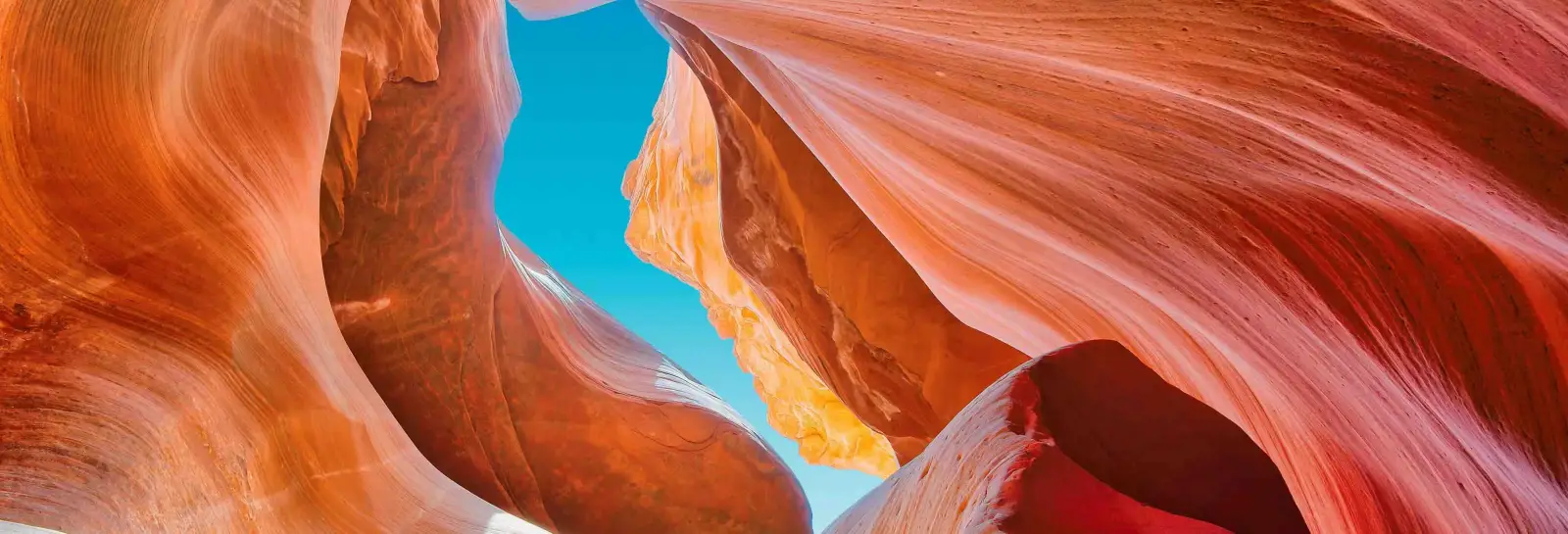
From local landmark to global icon. As more travelers passed through Page, AZ and canyon photography spread online, Antelope Canyon became widely recognized for its sculpted sandstone walls and dramatic light patterns.
Guided tours became the standard. Slot canyons are narrow and fragile, and conditions can change quickly. As visitation increased, a tour-based access model helped manage crowds, protect delicate surfaces, and provide consistent safety oversight on Navajo Nation land.
Rules and seasonal operations evolved. Timed entry, group control, and weather-related closures are now part of normal operations—especially during monsoon months when flash flood risk rises.
Key Takeaways
- Access is regulated under Navajo Nation rules and requires authorized guides.
- Group control helps reduce congestion in narrow corridors and protects fragile sandstone.
- Tour availability can change due to weather—especially during monsoon season.
- Timed entry improves safety and makes the experience more manageable for visitors.
Protection, Safety & Modern Regulations
Antelope Canyon is beautiful but not forgiving. Modern rules exist for two reasons: protecting fragile sandstone and keeping visitors safe in a slot canyon environment.
Slot canyons can flood even when the sky above the canyon looks clear. Rainfall upstream can send fast-moving water into narrow corridors with little warning.
- Guided access only: entry is managed by Navajo Nation–authorized guides and operators.
- Weather-based closures: tours may pause or cancel during monsoon activity or flood risk.
- Timed entry & group control: limits congestion and improves safety in tight passages.
- Leave-no-trace protection: no carving, no graffiti, no removing sand/rocks.
- Follow guide instructions: routes, pacing, and stopping points are chosen for safety.
These rules aren’t just formalities—they’re what make it possible to keep Antelope Canyon open while protecting the canyon and its visitors.
Monsoon Season & Flash Flood Risk
The highest flash flood risk typically occurs during the summer monsoon season. Tours may be adjusted quickly when storm activity increases, even if conditions seem calm at the canyon entrance. If your date is flexible, checking forecasts and booking morning slots can reduce weather disruption risk.
What Visitors Can Do
- Arrive early for check-in and group assignment.
- Wear closed-toe shoes with good grip; avoid loose sandals.
- Carry only essentials—large bags can slow movement in narrow sections.
- Listen for instructions on stopping points and photo timing.
- Respect barriers and “no-touch” guidance to protect sandstone surfaces.
Why Cultural Respect Matters Today
Antelope Canyon is not only a natural wonder—it remains part of Navajo Nation land. Respecting the canyon means respecting the community that protects and manages it.
For many visitors, Antelope Canyon is a bucket-list photography destination. For the Navajo people, it is homeland. Tourism provides economic opportunity, but it also requires balance—protecting fragile sandstone formations while ensuring cultural dignity and long-term sustainability.
Responsible visitation supports Navajo-guided operations, helps preserve the canyon’s natural state, and ensures that future generations can continue to experience it safely. Simple actions—following guide instructions, respecting access rules, and understanding the canyon’s cultural context—make a meaningful difference.
A Respectful Visit
- Follow Navajo guide instructions at all times.
- Avoid touching delicate sandstone walls unnecessarily.
- Do not carve, write, or leave markings of any kind.
- Support authorized local tour operators.
- Be mindful of space in narrow sections.