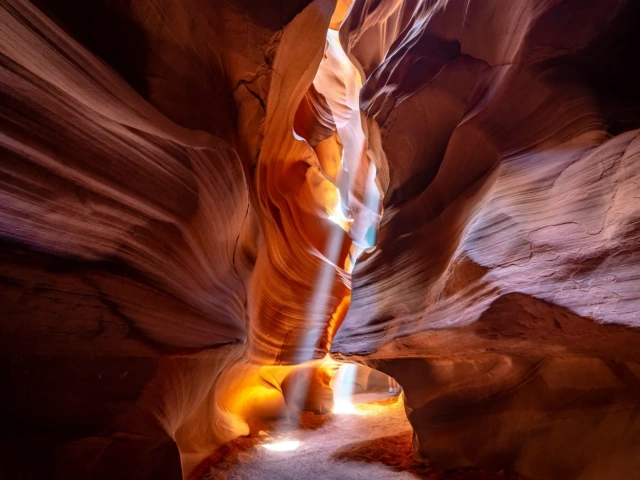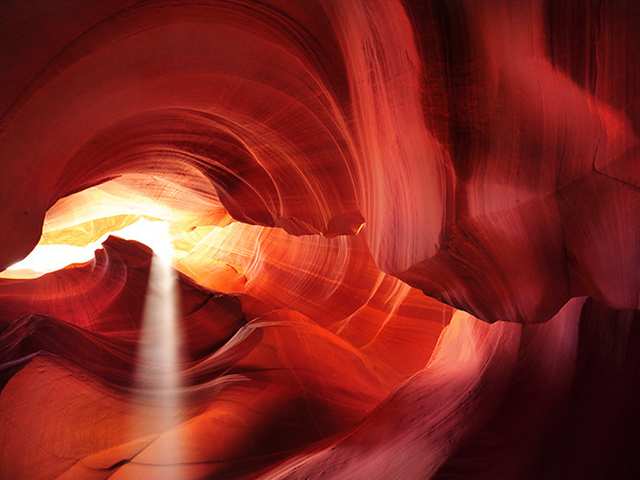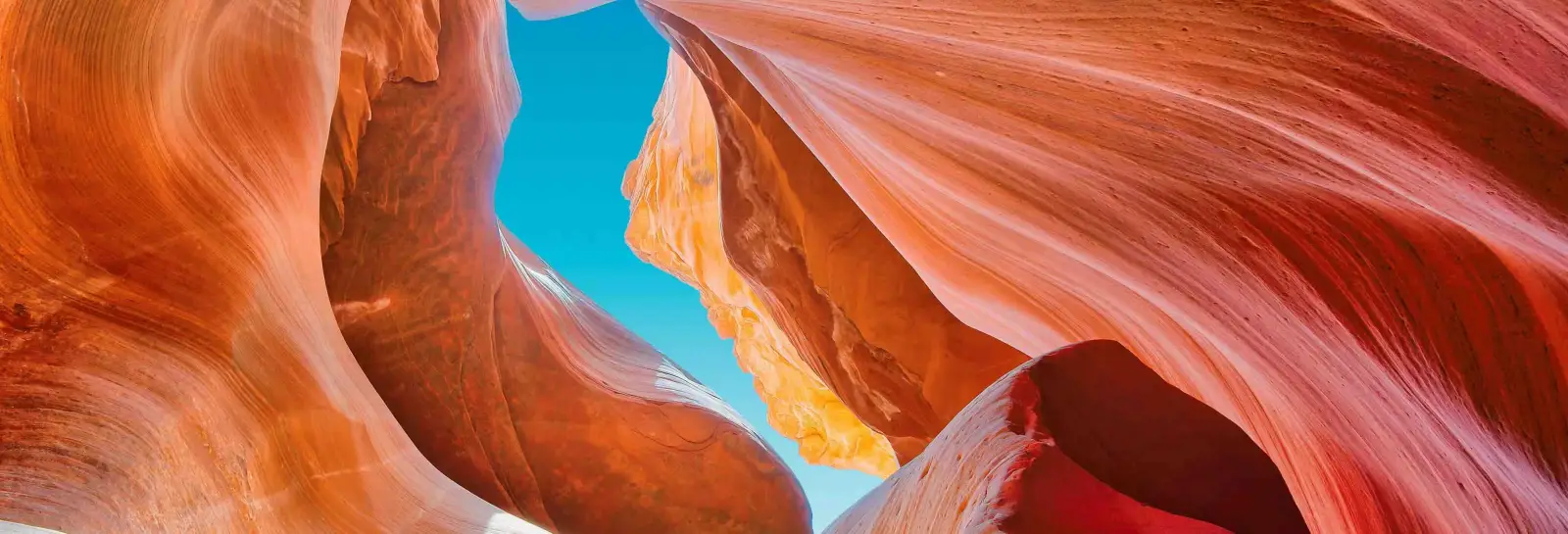
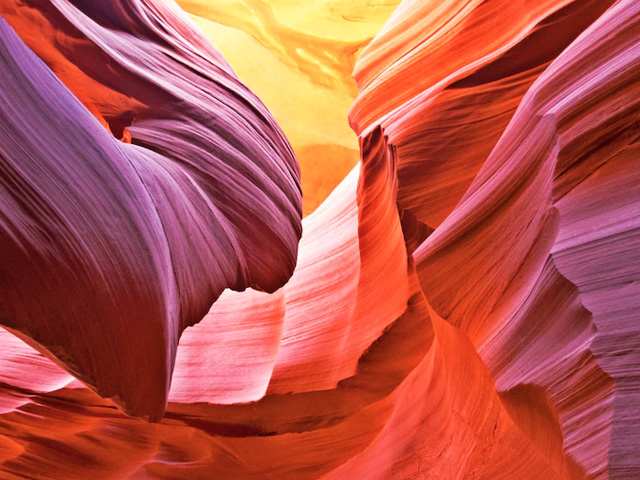
Lower Antelope Canyon offers a more adventurous slot canyon experience, featuring ladders, stairs, and winding sandstone passages. Guided tours provide access to dramatic rock formations and unique photo angles, making Lower Canyon a popular choice for active travelers and repeat visitors.
Why Choose Lower Antelope Canyon
Lower Antelope Canyon is another section of the Antelope Canyon slot canyon system near Page, Arizona. Unlike Upper Canyon, it follows a deeper route below ground, with ladders, narrow passages, and constantly changing sandstone formations throughout the tour. If you're comparing seasons and lighting conditions, see the best time to visit Antelope Canyon guide.
Lower Antelope Canyon emphasizes exploration and vertical movement. Upper Canyon is known for its iconic light beams and easier walking path, while Canyon X offers a quieter experience with smaller groups.
Still deciding which section fits your travel style? Upper vs Lower vs Canyon X.
Lower Antelope Canyon stands out for movement, depth, and tighter passages. The route feels more active than Upper, making it a better fit for travelers who want a more immersive slot canyon walk.
Lower feels less like a scenic corridor and more like a hands-on exploration route.
If you want more movement and a stronger sense of descent into the canyon, Lower is often the better match.
| Feature | Lower Canyon Experience | What It Means for Visitors |
|---|---|---|
| Entry / movement | Includes ladders and stairs | More active than Upper Canyon |
| Passage width | Tighter and more enclosed | Stronger immersive slot canyon feel |
| Best for | Adventure-minded visitors | Great if you prefer exploration over ease |
Key highlights to help you understand what makes Lower Antelope Canyon unique.
A more physical route with ladders and steps that add an adventurous feel to the canyon experience.
Frequent elevation changes create varied angles, textures, and constantly changing compositions.
Visitor movement is spread along the winding route, often feeling less congested than Upper Canyon during peak times.
Lower Antelope Canyon offers a distinct experience shaped by movement, elevation changes, and evolving perspectives.
Lower Antelope Canyon is carved below ground level, creating a more enclosed, immersive atmosphere compared with Upper Canyon and Canyon X.
Stairs and ladders guide visitors through varying elevations, creating a sense of progression as you move through the canyon.
Instead of direct light beams, Lower Canyon features softer light, shadows, and layered color transitions along the walls.
A step-by-step look at how a typical Lower Antelope Canyon visit unfolds.
Arrive early at your operator’s check-in location. Guides provide safety instructions before entering the canyon.
Entry involves stairs and ladders that take you below ground into the slot canyon.
Expect tight corridors, elevation changes, and constantly shifting perspectives as you move through the canyon.
Tours typically last 60–90 minutes and end after climbing back to ground level.
Photography in Lower Canyon is immersive and dynamic, shaped by movement, depth, and constantly shifting perspectives below ground.
Lower Antelope Canyon is known for formations like Lady in the Wind, spiral walls, wave-like curves, and narrow S-shaped corridors. Unlike Upper Canyon, these shapes emerge as you move, encouraging photographers to slow down and discover compositions step by step.
Lower Canyon favors handheld photography. Lightweight mirrorless cameras and phones perform well in tight spaces, while wide-angle lenses emphasize vertical depth. Mid-range focal lengths are ideal for isolating textures and flowing lines without interrupting group movement.
Light levels are generally lower than in Upper Canyon. Use higher ISO, wider apertures, and steady hand positioning. Meter for highlights to preserve sandstone gradients, and fine-tune white balance to capture warm reflected light accurately.
Lower Antelope Canyon tours are tightly guided for safety, flow, and preservation. Following your guide at all times is essential.
Lower Antelope Canyon is a narrow, below-ground slot canyon. Guests must follow the guide’s instructions and pace at all times.
The route includes multiple ladders and narrow sections. Guides manage spacing to keep movement safe and smooth.
Stops are brief and coordinated. Free wandering or stopping behind the group is not permitted.
Tripods, flash lighting, video recording, and large bags are not permitted on standard tours.
No touching, carving, or leaning on sandstone walls. These formations are fragile and irreplaceable.
Check-in times, cancellation rules, and meeting locations depend on the specific tour you book with.
Both are iconic slot canyons near Page, AZ—choose based on comfort, movement, and photography style.
A below-ground, more adventurous walk with ladders, narrow passages, and constantly changing perspectives.
The easiest walk with the best chance of iconic light beams in the right season and time window.
Pick Lower for a more immersive, “under the surface” slot canyon experience.
Pick Upper for the best chance during peak beam conditions.
If yes, Lower is a great fit. If not, Upper is easier.
Lower often feels more continuous inside, while Upper can be more stop-and-go.
Important details about ladders, difficulty, and what makes Lower Canyon unique.
Yes. The route includes several ladders and staircases used to move between different canyon levels.
It is considered moderate. Visitors should be comfortable with climbing ladders and navigating narrow passages.
Yes. It involves more movement, vertical transitions, and tighter spaces compared to the flat path in Upper Canyon.
It depends on mobility and comfort level. The ladders and confined areas may not be ideal for everyone.
Yes. Access is only possible with authorized guides due to the canyon’s structure and safety requirements.
Most tours last around 60–90 minutes, depending on group size and pace.
Wear comfortable shoes with good grip and avoid loose items, as you’ll be climbing and moving through tight areas.
Yes. It offers unique angles, textures, and dramatic formations, though lighting differs from Upper Canyon.