Antelope Canyon Weather Guide by Season
Antelope Canyon weather varies significantly by season. Summer monsoon storms can affect tour operations, while winter brings cooler temperatures and fewer crowds. This guide explains monthly temperatures, rainfall patterns, flash flood risks, and how weather conditions influence tour availability, photography, and the best time to visit.
Antelope Canyon Weather Overview
Antelope Canyon sits in a high-desert climate near Page, Arizona. Expect big daily temperature swings, intense sun in open areas, and cooler, shaded conditions inside the slot canyon.
High desert swings
Mornings can feel cool, midday warms quickly, and evenings drop fast—especially outside the canyon.
Rain impacts tours
Even distant storms can change conditions. Slot canyons respond quickly to rainfall in the wider area.
Safety comes first
Tours may delay or close for flash-flood risk. Closures can happen with short notice.
Weather by Season at Antelope Canyon
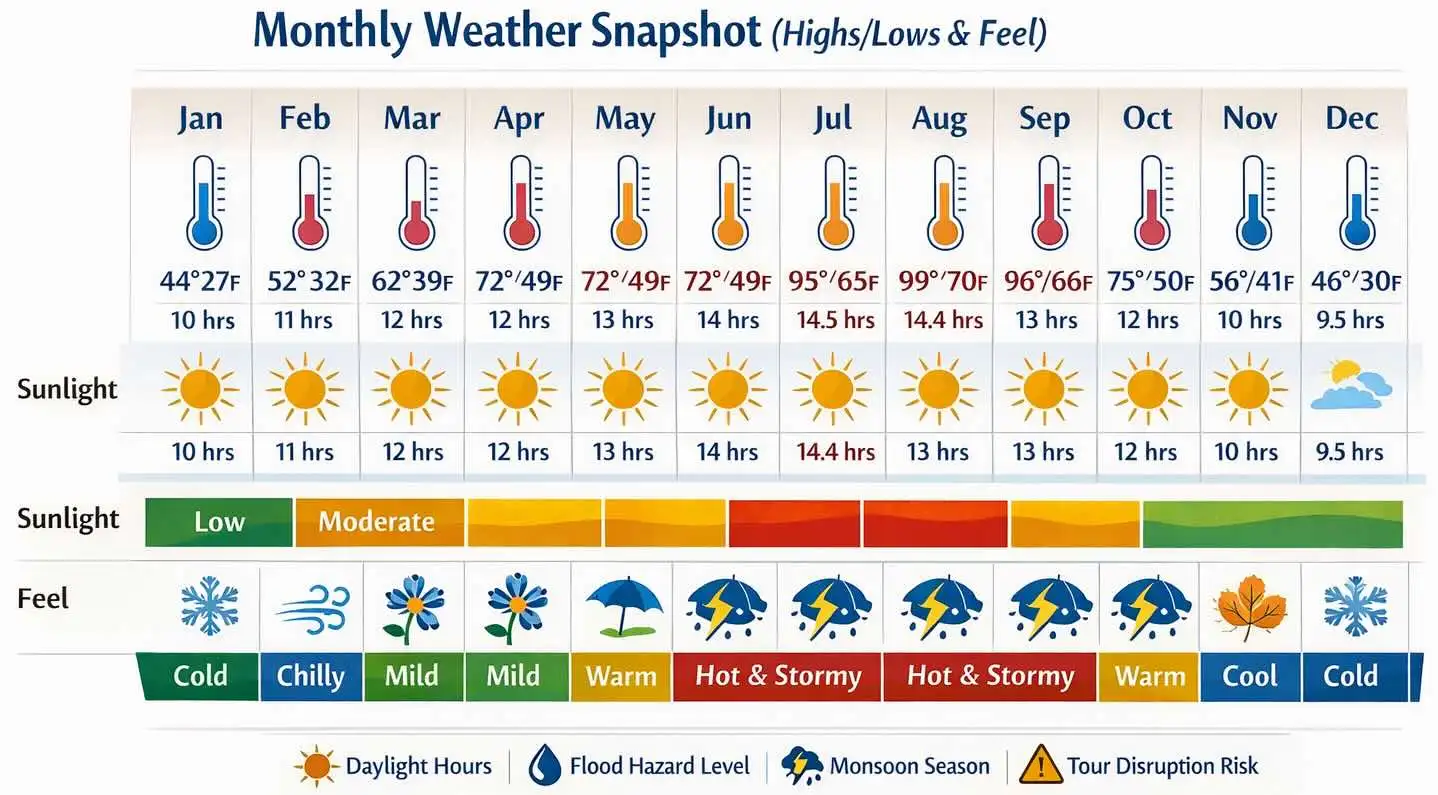
Each season changes not just temperature, but how the canyon feels, how tours operate, and what kind of experience you can expect inside the slot canyon.
Spring (Mar–May)
Mild temperatures and increasing daylight make spring one of the most comfortable times to visit. Winds can be strong, but flash flood risk is generally low.
Summer (Jun–Aug)
Hot outside the canyon, cooler inside. This is peak monsoon season, when sudden storms can cause delays or closures despite clear skies earlier in the day.
Fall (Sep–Nov)
Stable weather returns after monsoon season. Temperatures cool gradually, crowds ease, and conditions are generally predictable for tours.
Winter (Dec–Feb)
Cold mornings and occasional snow are possible. Tours still run most days, but lighting is softer and daylight hours are shorter.
Weather & Flash Flood Season
Flash flood risk is the #1 weather factor that affects Antelope Canyon tours. Closures are based on safety conditions—not just what the sky looks like above the canyon.
- 1 Monsoon season (typically Jun–Sep)
- 2 Storms can be far away
- 3 Slot canyons collect water fast
- 4 Tours pause or close for safety
Summer monsoon patterns can bring sudden thunderstorms. Even when it’s sunny in Page, conditions can change quickly in surrounding drainages.
A storm upstream can send water into the canyon system later. That’s why “no rain here” does not guarantee safe canyon conditions.
Narrow slot canyons concentrate flow. Water, sand, and debris can move through the canyon rapidly, leaving little time to react.
When risk indicators rise, tours may be delayed or canceled. The goal is prevention—closures happen before conditions become dangerous.
What to do in flash-flood season
- Check tour status on the day of your visit (especially afternoon times).
- Arrive early and follow on-site instructions—updates can happen fast.
- Keep your schedule flexible (avoid back-to-back commitments).
- Pack light layers: outside heat vs. cooler canyon air can feel very different.
Lower vs Upper vs Canyon X
- Lower: below-ground route can feel more enclosed; weather sensitivity is often higher.
- Upper: conditions still matter, but the experience is more “windowed” by entry timing.
- Canyon X: open-feeling chambers can make light/shadow change quickly as clouds move.
How Weather Affects Visibility Inside the Canyon
Weather conditions above ground directly influence light quality, color contrast, and overall visibility inside Antelope Canyon.
Unlike open landscapes, Antelope Canyon does not respond to weather in obvious ways. Rain, clouds, wind, and even distant storms can subtly change how light travels, reflects, and settles within the narrow sandstone walls.
On clear days, sunlight enters the canyon more directly, producing stronger contrast between illuminated surfaces and shadowed curves. This is especially noticeable in Upper Antelope Canyon, where beam formation depends on clean, uninterrupted light entering from above.
Cloud cover softens incoming light, reducing harsh highlights and expanding mid-tones. While this may limit dramatic beams, it often enhances color consistency and texture detail—an effect many photographers prefer in Lower Antelope Canyon and Canyon X.
Wind plays a secondary but noticeable role. Dust and sand in the air can diffuse light, lowering clarity but increasing atmospheric depth. Guides may also adjust pacing during windy conditions to maintain safety and visibility.
After rainfall—when tours are operating again—the canyon walls often appear darker and more saturated. Reflected light becomes richer, and color separation between layers of sandstone is more pronounced, even without direct sunlight.
Understanding these subtle shifts helps set realistic expectations: visibility inside Antelope Canyon is shaped as much by sky conditions as by time of day or season.
Wind, Sand, and Visibility
Wind rarely cancels tours, but it strongly affects comfort, visibility, and how the canyon feels before and after you enter.
The open desert around Page, Arizona is prone to gusty conditions, especially in spring and early summer. While Antelope Canyon itself is sheltered once you are inside, wind can significantly impact the experience outside the canyon.
Strong winds often carry fine sand. This can reduce visibility at parking areas and meeting points, dry out eyes quickly, and make waiting outside less comfortable—particularly on exposed routes.
Inside the canyon, wind effects drop sharply. The narrow walls block gusts, creating a calmer environment with more stable temperatures and clearer air. This contrast is one reason visitors are often surprised by how different conditions feel once the tour begins.
What wind changes (and what it doesn’t)
- Wind affects comfort mainly before entering the canyon.
- Blowing sand can reduce visibility at meeting points.
- Inside the canyon, conditions are usually calm and sheltered.
- Wind alone rarely causes tour cancellations.
Weather-Related Safety Considerations
Antelope Canyon tours operate under strict safety rules shaped by weather patterns unique to slot canyons.
Slot canyons are highly sensitive to weather conditions, especially rainfall occurring miles away from the canyon itself. Because Antelope Canyon funnels water rapidly through narrow passages, flash flood risk is taken seriously regardless of local skies.
During periods of elevated risk—most commonly from late summer monsoon storms—tours may be delayed, rescheduled, or canceled entirely. These decisions are made conservatively and often with little notice, prioritizing visitor safety over schedule certainty.
Wind and temperature extremes also affect how tours are conducted. Strong winds can increase airborne sand, reduce visibility, and make footing less stable, while extreme heat may shorten stops or adjust group pacing inside the canyon.
For visitors, the most important preparation is flexibility. Weather-related changes are not a reflection of poor planning—they are an inherent part of visiting a protected slot canyon environment where conditions can change rapidly.
Checking forecasts in the days leading up to your visit, arriving early, and allowing buffer time in your itinerary can help reduce disruption if weather conditions shift.
Antelope Canyon Weather FAQ
Quick answers to common weather questions—especially around storms, wind, and cancellations.
Can tours be canceled even if it’s sunny in Page?
Yes. Flash flood risk can be triggered by rain far upstream. Tours may be canceled based on regional conditions, not just what you see locally.
What months are most associated with flash flood risk?
Risk is typically higher during the summer monsoon season. Storm patterns vary by year, so always check conditions close to your tour date.
Does wind affect Antelope Canyon tours?
Strong winds can blow sand into the canyon and reduce comfort and visibility. Tours usually continue unless conditions become unsafe.
Is it colder inside the canyon?
Often, yes. Slot canyons can feel cooler and shaded compared with the open desert, especially outside peak summer heat.
What happens if my tour is canceled due to weather?
Options typically include rescheduling or a refund depending on the booked policy. Details are shown during booking for your selected tour time.
Should I avoid visiting during monsoon season?
Not necessarily, but plan for flexibility. Choose a schedule with buffer time and keep alternative nearby activities in mind in case of weather changes.
What should I bring in hot weather?
Water, closed-toe shoes, and lightweight clothing. Avoid heavy bags and keep gear minimal. Heat can still be intense before and after the canyon portion of the tour.
What should I do if rain is forecast near my tour time?
Monitor updates and be ready for schedule changes. If you’re unsure, confirm the latest policy and instructions shown in your booking details.
Summary: Planning Around Antelope Canyon Weather
Weather doesn’t need to dictate your trip—but understanding its role helps you plan with confidence.
Antelope Canyon tours operate in a desert environment where conditions can change quickly. Heat, wind, and seasonal storms affect comfort and safety more than they affect the underlying beauty of the canyon itself.
The most important planning principle is flexibility. Flash flood risk, especially during the summer monsoon season, can lead to last-minute adjustments even when skies appear clear. Choosing tour times with buffer space and avoiding overly tight itineraries reduces stress.
Different canyons respond to weather differently. Lower Antelope Canyon is more sensitive to flood risk, while Upper Antelope Canyon and Canyon X are comparatively less affected. Understanding these differences helps set realistic expectations. If you are still deciding which section fits your trip, start with this Upper vs Lower vs Canyon X comparison before choosing a time slot.
With basic preparation—appropriate clothing, hydration, and schedule flexibility—weather rarely diminishes the overall experience. In many cases, shifting light, cooler temperatures, or softer conditions can even enhance your visit.